
Lead Generation Strategies for Service Businesses
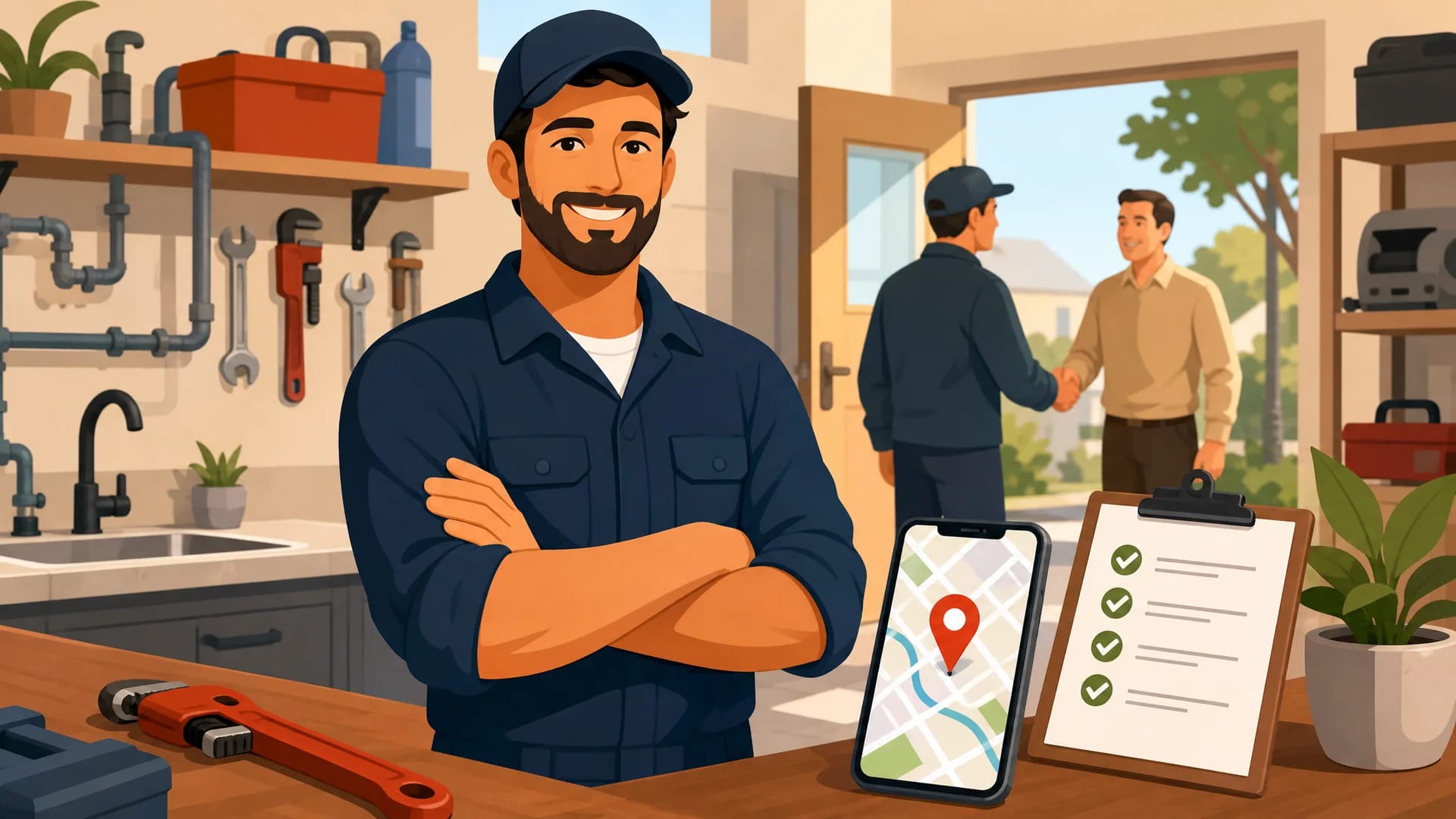
Most lead generation advice online is written for ecommerce stores or B2B SaaS companies. If you run a plumbing business, a landscaping company, or a consulting practice, that advice rarely translates. The buying cycle is different, the geography matters, and trust plays a bigger role than it does in any online checkout flow. This playbook covers lead generation strategies for service businesses channel by channel, so you can stop guessing and start building a system that fills your pipeline with paying jobs.
Why Generic Lead Gen Advice Fails Service Businesses
Most lead gen content assumes you're selling to a national audience, running retargeting campaigns to warm e-commerce shoppers, or nurturing a B2B prospect list for months. Service businesses operate differently. Your customers are local, they need you urgently, and they make decisions fast based on proximity and trust, not a polished brand story.
A tradie doesn't need a content funnel designed for a SaaS free trial. A bookkeeper targeting small business owners in Brisbane needs to rank for suburb-level searches and convert a phone call, not a 14-day signup. That gap between generic advice and real-world service business needs is exactly what this guide bridges.
The tactics below are built for service-based revenue models, tradies, consultants, cleaners, builders, and any business where you sell time and expertise.
Your Lead Generation Foundation: Website, CRM, and Trust Signals
Before you spend a dollar on ads or a minute on SEO, your foundation needs to be solid. Traffic without conversion infrastructure is wasted money.
What a High-Converting Service Business Website Actually Needs
Your website has one job: turn visitors into enquiries. That means a clear offer, a visible phone number, and a contact form above the fold. Mobile speed matters enormously, most local service searches happen on phones, and a slow-loading site kills conversions before they start.
Trust signals are non-negotiable:
- Real photos of your work, your team, and your equipment
- Verified reviews pulled from Google or embedded from a credible source
- Licence numbers and insurance details where relevant (especially for trades)
- A specific service area so visitors know you cover their suburb
At Jumpgro Marketing, we've seen service businesses waste significant ad spend by sending paid traffic to a homepage with no clear call-to-action. Fixing this single issue routinely lifts lead volume before a single extra dollar goes into media. The landing page is the lever most owners ignore.
Using a CRM to Stop Leads Falling Through the Cracks
A CRM doesn't need to be complex. For most small service businesses, a simple pipeline with stages, new enquiry, quoted, won, lost, is enough to track where leads are going and why they're dropping off.
Without a CRM, leads get lost in inboxes, WhatsApp threads, and mental to-do lists. With one, you can see your lead-to-quote rate, follow up consistently, and identify which channels are actually producing closed jobs. Start simple, stay consistent.
Online Lead Generation Australia: Local SEO and Google Business Profile
For Australian service businesses in 2026, Google Business Profile (GBP) remains the highest-leverage free channel available. It costs nothing to set up and directly targets people searching for your service in your area right now.
Optimising Your Google Business Profile for Service Area Searches
Google's own data consistently shows that the majority of people searching for local services contact a business within 24 hours of that search. That makes search visibility a near-immediate revenue lever, not a slow, long-term SEO play.
To get the most out of GBP:
- Set your service areas at the suburb level, not just the city. "Plumber Bondi" and "Plumber Coogee" are different searches with different competition.
- Update your photos regularly, Google rewards active profiles with better visibility.
- Respond to every review, positive and negative. It signals engagement to both Google and potential customers.
- Use the services and description fields to include the specific terms your customers search.
A residential plumbing business that optimises its GBP for suburb-specific service area terms, rather than just "plumber Sydney", can surface in map pack results for high-intent searches that competitors overlook. Free leads from searches your competitors aren't targeting.
Local SEO Tactics That Drive Inbound Leads for Small Business
Beyond GBP, your website needs location-specific pages for each suburb or region you serve. A single "Service Areas" page with a list of suburbs does very little. Dedicated pages, like "Electrician in Parramatta" or "Commercial Cleaning Geelong", give Google something to index and rank.
Add locally relevant content to each page: what you do in that area, how long you've been serving it, and any projects you've completed there. It doesn't need to be long, it needs to be specific and genuine.
Paid Lead Gen Tactics 2026: Google Ads and Meta for Service Businesses
Paid channels can accelerate your lead flow significantly, but the two main platforms serve different purposes. Understanding the difference saves you budget and frustration.
Google Search Ads: Capturing High-Intent Buyers
Google Search Ads put you in front of people actively searching for what you do. Someone typing "emergency electrician Melbourne" is ready to hire, they're not browsing. That bottom-of-funnel intent makes Google Search the right starting point for most service businesses.
Practical guidance for 2026:
- Start with a tight campaign targeting your core service and your most profitable suburb or region, don't spread budget thin.
- Use call extensions and lead form extensions so mobile users can contact you without clicking to the site.
- Bid on specific service terms, not just your business category. "Hot water system replacement" converts better than "plumber."
- A realistic cost-per-lead varies widely by trade and location, but the number that matters is cost-per-closed-job, not cost-per-click.
Meta Ads for Digital Leads for Tradespeople and Service Providers
Meta (Facebook and Instagram) operates differently. People aren't searching for you, you're interrupting their scroll. That means Meta works best for top-of-funnel awareness, retargeting website visitors, or promoting a specific offer to a defined local audience.
For tradespeople and service providers, Meta is most effective when:
- You're promoting a seasonal offer (ducted heating service before winter, gutter cleaning before storms)
- You're retargeting people who visited your website but didn't enquire
- You're building brand familiarity in a local area before they need you
Start with Google Search if your budget is limited. Add Meta once your Google campaigns are profitable and you want to expand your reach.
How to Get More Leads for Your Service Business Through Content and Social Proof
Content and social proof aren't just "nice to have", they directly shorten the time between a prospect finding you and picking up the phone.
Content That Attracts the Right Enquiries
Short-form video, before-and-after project posts, and FAQ blog content do two things at once: they build search visibility and they build trust. Both matter for how to get more leads for your service business without constantly paying for ads.
Focus on content that answers the questions your customers actually ask:
- "How much does it cost to replace a hot water system?"
- "What's included in an end-of-lease clean?"
- "How long does a bathroom renovation take?"
These FAQ-style posts rank in Google, attract the right traffic, and pre-qualify enquiries before they even contact you.
Turning Reviews and Case Studies Into a Lead Magnet
Service buyers can't try before they buy. They're making a trust decision based on limited information. Reviews, video testimonials, and case study pages compress that trust-building phase dramatically.
A landscaping or building company that publishes regular before-and-after project posts on Google Business Profile and Instagram creates a rolling portfolio that prospects browse before making an enquiry. That content does the selling before the sales call happens.
Aim for a consistent review velocity, a steady trickle of new Google reviews every month signals an active, trusted business. Five reviews from two years ago tells a different story than twenty reviews from the last six months.
Measuring What Matters: Turning Digital Leads Into Revenue
The most common measurement mistake service business owners make is tracking the wrong things. Impressions, follower counts, and website visitors are not revenue. They're indicators, not outcomes.
The metrics that actually matter:
- Cost per lead, what did it cost to generate each enquiry?
- Lead-to-quote rate, how many enquiries turned into a formal quote?
- Quote-to-job rate, how many quotes turned into paid work?
When you track these three numbers by channel, you stop optimising for traffic and start optimising for jobs. You'll often find that one channel produces three times the volume of another but converts at a fraction of the rate. That tells you where to put next month's budget.
The service businesses that grow fastest aren't the ones spending the most on ads, they're the ones with the tightest follow-up process. A lead that doesn't get called back within an hour is often a lead lost to a competitor who did. Speed to lead is a competitive advantage most service businesses underestimate.
Build a simple weekly habit: review your new enquiries, check your open quotes, and close the loop on anything that went quiet. That discipline, backed by a CRM, compounds over time into a reliable pipeline.
If you're also weighing up how to find the right support to execute these strategies, choosing the right digital marketing agency in Australia is a useful next step, particularly if you want channel-specific execution, not a generic retainer.
Ready to build a lead generation system built for your service business? Jumpgro Marketing offers a free strategy session where we map out a channel-specific growth plan based on your trade, service area, and revenue goals, not a cookie-cutter audit. Get in touch today and let's build a pipeline that actually converts.