
Digital Marketing Strategy for Small Business 2026
Most marketing advice you'll read this year assumes you've got a team, a budget, and hours to spend testing new channels. If you're running a service business, a plumber, physio, electrician, or bookkeeper juggling marketing between jobs and invoices, that advice doesn't fit. This is a digital marketing strategy for small business 2026 built for exactly that reality: limited time, limited budget, and zero patience for tactics that don't earn their place.
Why Most 2026 Marketing Guides Don't Fit Small Business Reality
Search "marketing strategy 2026" and you'll get frameworks built for brands with dedicated content teams, in-house designers, and monthly budgets bigger than most small businesses spend in a year. The advice isn't wrong. It's just written for someone else.
The enterprise-team assumption most strategy advice makes
Enterprise strategy guides assume you can run five channels at once: SEO, paid ads, social, email, and content, each managed by a different specialist. A small service business owner doesn't have that luxury. You're the marketer, the bookkeeper, and the person doing the actual job.
A workable small business marketing plan for 2026 has to start from that constraint. Fewer channels, chosen deliberately and run properly, beats five tactics run half-heartedly.
How to Build a Small Business Marketing Plan for 2026
Before picking a single channel, you need clarity on who you're marketing to and how they actually find and choose a business like yours. Skipping this step is why so many small business marketing plans fail before they start.
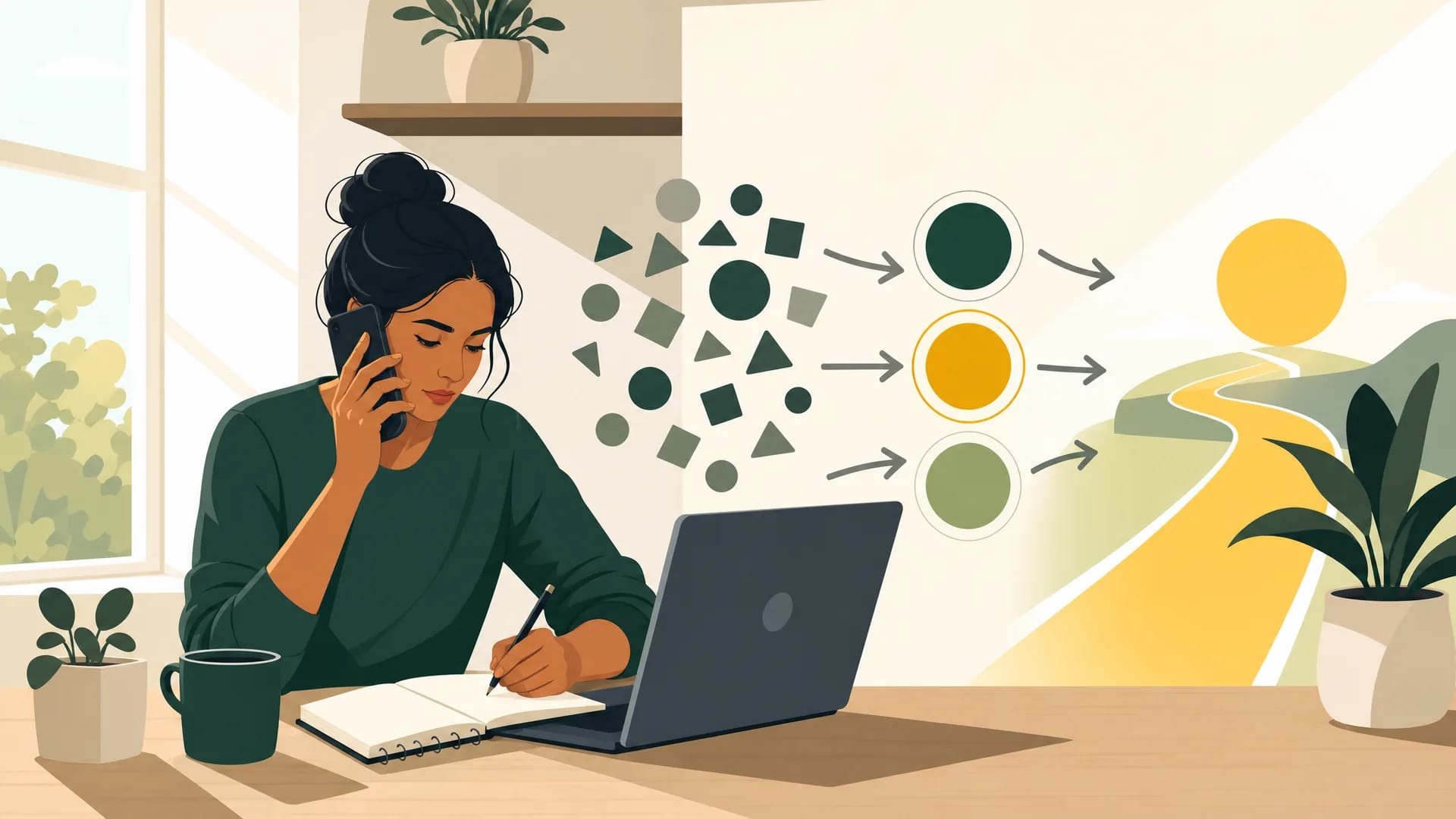
Start with one customer journey, not five channels
Pick your ideal client. Not "everyone who needs a plumber", the specific type of job and customer you want more of. Then map their path. How do they realise they have a problem? Where do they search? What makes them trust one business over another, and what makes them pick up the phone or fill in a form?
Once that journey is clear, channel selection becomes obvious. If your ideal client searches Google when their hot water system fails, your first priority is being visible and credible in that search, not building a following on a platform they don't use to find a plumber.
Set a realistic 2026 marketing budget as a share of revenue
Most small service businesses run marketing budgets under 10% of revenue. Every channel choice has to earn its place rather than being tried "just in case." That's the frame to use when deciding where to focus your marketing budget for 2026: fewer bets, made deliberately, backed by enough spend to actually work.
A budget spread across five underfunded channels usually performs worse than the same money put into one or two done properly.
Where to Focus Your Marketing Budget in 2026
This is the part most guides skip, and it's the part that actually determines your results. Prioritisation, not diversification, separates small businesses that grow steadily from those stuck running the same flat-performing tactics year after year.
The 80/20 channel mix for service businesses
For most local service businesses, the highest-leverage combination is:
- A well-optimised Google Business Profile and local search presence, so you show up when someone nearby searches for what you do
- One paid or referral channel that reliably brings in leads you can measure
That's it. Not five platforms, two channels working hard. Get local SEO essentials for 2026 sorted first. It's often the cheapest channel per lead and the one closest to someone ready to book.
When to add a second channel (and when not to)
Add a second channel once the first is genuinely working, not before, and not just because a competitor is doing it. If your Google Business Profile and local search are converting well, running Google Ads for local services is often the logical next step, because it builds on a visibility base that's already working.
Social media can come later, once your booking pipeline is stable enough to support building an audience rather than chasing leads. Before adding anything new, check what you already have is pulling its weight. Measuring your marketing ROI tells you whether channel one is actually done, or just started.
At Jumpgro, we build 90-day marketing roadmaps for service businesses before touching a single ad dollar. Prioritisation beats spreading budget thin across five channels.
Marketing Priorities for Small Business This Year
Strip away the jargon and marketing priorities for small business come down to three things, in this order: visibility, trust, retention.
Visibility: being found when someone searches now
If someone searches for your service right now, do you show up? That's the first test. No amount of clever branding matters if a competitor is the one appearing when the phone-ready customer searches.
Trust: converting attention into booked jobs
Getting found is only half the job. Reviews, clear pricing signals, a professional-looking website, and a fast response time all turn a search result into a booked job. This is where lead generation strategies that convert come in, the tactics that turn attention into an actual enquiry.
Retention comes last, and it's the one small businesses most often skip: following up with past clients, asking for reviews, staying visible for repeat and referral work. It's cheaper than winning a new customer from scratch, so it deserves a place in the plan even if it's not first.
Setting Up an Online Marketing Strategy in Australia
An online marketing strategy in Australia has a few local wrinkles worth planning around, even without needing hard numbers to make the point.
Local market considerations for Australian service businesses
Search behaviour for local services in Australia tends to be immediate. Someone needs a tradie, a clinic, or a service provider now, and they search on their phone, near them, expecting fast responses. That rewards businesses with strong local search presence and quick follow-up over those relying on brand awareness alone.
Competition density also varies a lot between metro and regional areas. In a capital city, you're often competing with dozens of similar businesses for the same search terms, so differentiation and review strength matter more. In regional areas, there may be fewer competitors, but the customer pool is smaller too, so consistency and reputation carry even more weight.
Either way, the businesses that win in 2026 won't be the ones on the most platforms. They'll be the ones with the clearest customer journey from first search to booked job.
Turning Strategy Into a Simple 2026 Action Plan
Don't try to build a perfect 12-month plan on day one. Build the next 90 days instead: get visibility sorted, get one channel driving measurable leads, and get a simple system for follow-up and reviews running. Then review what's working before adding anything else.
That's how a digital strategy for SMBs should actually work: not five channels launched at once, but one solid foundation proven before you scale spend. If you want that roadmap built for your business rather than pieced together on evenings and weekends, book a free strategy call with Jumpgro Marketing and we'll help you build a prioritised 2026 plan around your actual budget. If you'd rather understand the full picture first, working with a marketing agency built for small business is worth reading before you decide how to execute.
Whichever channel you're weighing up next, the same rule applies: social media marketing in Australia or any other addition should only get budget once your foundation is proven, measured, and worth building on.