
SEO Vs Google Ads: Which Wins for Service Businesses?
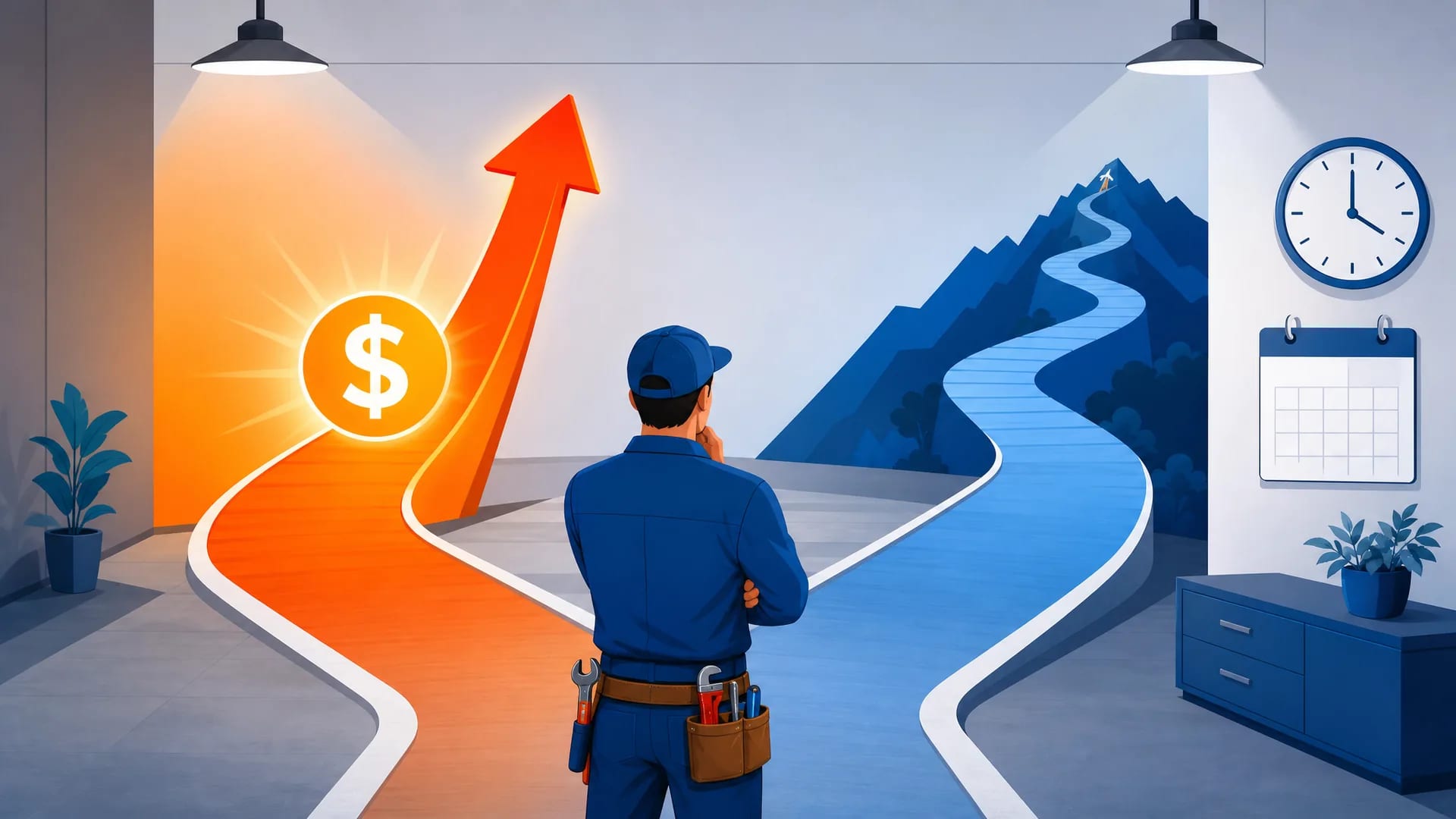
You're an electrician, a cleaning business owner, or you run a clinic or agency. You've got a limited marketing budget and two options everyone keeps mentioning: SEO and Google Ads. Most articles comparing them are written for e-commerce brands selling t-shirts, not for a plumber trying to book five jobs this week.
The real question isn't "which channel is better." It's which channel fits your budget and your timeline right now. This guide breaks down SEO vs Google Ads for service businesses with real numbers, real timeframes, and a decision framework you can actually use.
SEO vs Google Ads: The Real Difference for Service Businesses
SEO and Google Ads both get you found on Google. That's where the similarity ends.
Google Ads puts you at the top of search results the moment your campaign goes live. You pay per click. Turn the budget off, and your visibility disappears with it.
SEO earns your spot in organic results through content, technical fixes, and local search signals. It takes longer to build. But once you rank, you're not paying per click to stay there.
Why generic marketing advice doesn't fit trades and local services
Most SEO vs Google Ads content online is written for national or global brands with big budgets and patient timelines. A local service business doesn't have the luxury of testing for a year before deciding.
You need leads this month to make payroll. You also need a plan that doesn't leave you paying for every click forever. That tension between speed and sustainability drives the SEO vs Google Ads decision for service businesses. It's not some abstract debate about which channel is superior.
Speed to Results: How Long Does SEO Take vs Google Ads?
Timing is often the deciding factor for service business owners weighing up SEO or PPC for small business marketing. Here's how the two compare.
Google Ads: leads within days
Google Ads is built for speed. Once your campaign is approved and live, your ads can start showing within hours.
A local electrician launching a new website typically sees Google Ads leads within the first week of a campaign going live. That's the appeal: cash flow now, not in six months.
The catch is that results stop the moment you stop paying. There's no lingering visibility once the budget runs out.
SEO: building momentum over months
SEO moves slower because it depends on Google trusting your site over time. Search engines need to crawl your content, assess your authority, and compare you against competitors before ranking you well.
Ranking on page one organically for competitive local terms can take four to eight months of consistent SEO work. Less competitive suburbs or niche services can move faster. Highly competitive metro categories can take longer.
The trade-off is durability. Once you rank, you keep getting leads without paying for every click. For a deeper look at how this plays out over time, see how SEO builds local visibility over time.
Google Ads Cost vs SEO Cost Over 12 Months
Cost is where most service business owners get tripped up, because Google Ads and SEO spend money in completely different shapes.
Typical Google Ads cost for local services in Australia
Google Ads cost for local services depends on your industry, your city, and how competitive your keywords are. Trades like electricians and plumbers, along with legal and medical services, tend to sit at the pricier end because competition for clicks is fierce.
Most local service businesses run daily ad budgets alongside a monthly management fee if they're working with an agency. Costs scale directly with clicks. More traffic means more spend, and pausing the campaign stops the cost immediately along with the leads.
For a closer look at what this actually costs by industry, a full breakdown of Google Ads costs for local services is worth reading before you set a budget.
What a 12-month SEO investment looks like
SEO cost works differently. You're generally looking at a steadier monthly retainer that covers content, technical work, and local optimisation, sustained over a 12-month period or longer.
The spend front-loads into setup: fixing technical issues, building out service pages, and establishing local listings. Then it eases into a maintenance rhythm as rankings mature. Unlike Ads, an SEO investment keeps paying off in traffic even in months where you don't add new spend.
If you're weighing this against Google Ads cost for local services, it helps to see what SEO actually costs to outsource before comparing the two side by side.
Lead Quality: Paid Clicks vs Organic Search Traffic
Cost per lead isn't the whole story. Lead quality matters just as much, and this is where paid ads vs organic search in Australia genuinely diverge.
Google Ads captures immediate demand. Someone searches "emergency electrician near me" and clicks your ad because they need help right now. These leads convert fast, but they're often more price-sensitive. They're comparing three ads side by side and might go with whoever's cheapest or fastest to respond.
Organic search traffic behaves differently. People clicking your website in the organic results have often scrolled past the ads on purpose, or they've searched multiple times before landing on you. That builds a layer of trust before they even call.
Over time, organic leads tend to convert at higher rates and show more loyalty, because they found you rather than being sold to. Neither is "wrong." They just serve different stages of the buying decision. Once you're running both, measuring ROI across paid and organic channels becomes essential to know which is actually driving your best customers.
SEO or PPC for Small Business? A Decision Framework by Budget and Stage
Instead of picking a side, match your channel to your budget and your business stage. Here's a simple way to think about it.
New business or tight budget: start here
If you're new, cash-strapped, or need leads within the next few weeks, lean into Google Ads first. A cleaning business with a tight upfront budget often gets more immediate cash-flow benefit from a small, tightly targeted Google Ads campaign than from an SEO investment that won't show returns for months.
Start with a modest daily budget, focus on your highest-intent local keywords, and track every lead. This gets money coming in while you plan your next move.
Established business with room to invest: run both
If you've got 12+ months of runway and some breathing room in the budget, run SEO and Google Ads together. This is the setup that tends to compound.
Service businesses that run SEO and Google Ads together tend to see compounding growth. Paid campaigns capture immediate demand while organic content keeps building authority and lowering long-term cost per lead. As your organic rankings climb, you can often dial back ad spend on the keywords you now rank for and redirect that budget elsewhere.
This is also the best marketing channel mix for most local service businesses once they're past the survival stage. Not one channel forever, but a shifting balance between the two. For help mapping this against your overall spend, how to plan your overall marketing budget is a useful next step.
Jumpgro blends SEO and paid media in client strategies. We often start service businesses on Google Ads for immediate lead flow while SEO builds in the background, then shift budget as organic rankings mature. That way you're never stuck choosing one channel and hoping it's the right call.
Common Mistakes Service Businesses Make When Choosing a Channel
Most of the poor results we see trace back to timing and patience, not the channel itself.
Mistake: expecting SEO results in 30 days
SEO doesn't work on a 30-day clock. Businesses that launch an SEO campaign and expect page-one rankings within a month almost always pull the plug too early, right before momentum was about to build.
Set expectations at four to eight months from the start. Track leading indicators like rankings and traffic growth along the way, not just leads.
Mistake: switching Google Ads off before it's optimised
Google Ads also needs time to gather data before it performs at its best. Turning campaigns off after a slow first week, before the algorithm has learned who converts, wastes the setup work and the initial spend.
Give a campaign at least a few weeks of consistent budget and testing before judging its performance. Picking a channel purely because it's trending, rather than because it fits your business stage, is the fastest way to waste a marketing budget on either side. For a wider view of what else can support these two channels, broader lead generation tactics for service businesses is worth exploring too.
Getting Your SEO and Google Ads Mix Right
There's no single winner in the SEO vs Google Ads debate for service businesses. Google Ads wins on speed and cash flow. SEO wins on durability and cost per lead over time. The right marketing strategy for your service business budget depends on where you're standing today.
If you're not sure whether to start with Ads, SEO, or both, working with an agency that manages both channels takes the guesswork out of the decision. Book a free strategy call with Jumpgro and we'll build you a tailored SEO vs Google Ads budget plan based on your business stage, your goals, and what you can actually afford to spend right now.