
Website Design for Service Businesses
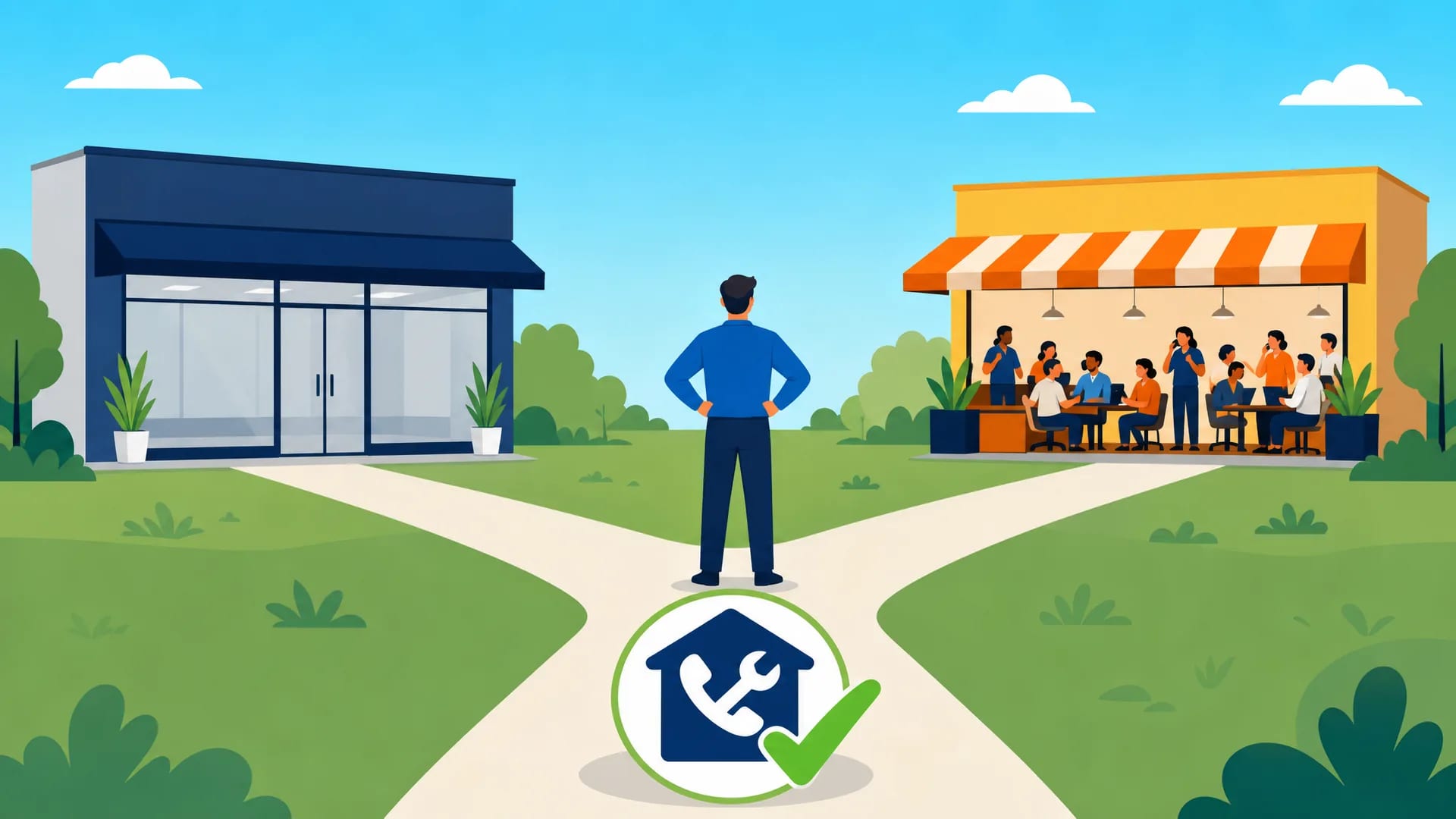
If you've invested money into a website and it's still not ringing the phone or filling your inbox, you're not alone. Most website design for service businesses gets the aesthetics right and the outcomes completely wrong. A site that looks sharp but doesn't generate enquiries isn't an asset, it's an expensive brochure. This guide breaks down exactly what separates a high-converting service business website from one that just sits there, and what you can do about it.
Why Most Service Business Websites Fail to Convert
Service business owners are often told to "get a professional website", so they do. They brief a designer, approve a slick layout, and hit publish. Then they wait. And the enquiries don't come.
The problem isn't the design. It's the thinking behind it.
Most web designers are trained to create visually impressive work. But visual appeal and conversion performance are two different goals, and too many service business websites optimise for the wrong one.
The portfolio trap: looking good vs. generating leads
A portfolio-first approach treats the website like a showcase. It looks great on the designer's own portfolio. But your potential customers don't land on your site to admire it, they land on it because they have a problem and they need someone to fix it. Fast.
A local plumbing business with a polished portfolio site and no visible phone number above the fold, no Google reviews displayed, and a contact form buried in the footer is a pattern we see constantly in our web design audits. It's costing those businesses jobs every week.
The question to ask about every design decision isn't "does this look good?" It's "does this make it easier for someone to contact me?"
The Non-Negotiable Elements of a Service Business Website
A professional website for a small business isn't about impressing visitors. It's about removing every barrier between a visitor's problem and your solution.
Clear service pages that speak to the customer's problem
Generic service pages ("We offer plumbing services across Sydney") don't convert. Problem-led copy does.
Instead of listing what you do, describe the situation your customer is in: the leak under the sink, the electrical fault before a big event, the lawn that's out of control before summer. Then position your service as the fix.
Each service should have its own dedicated page. This helps with SEO, but more importantly it lets you speak directly to that customer's specific pain, not a general audience.
Every service page needs:
- A clear headline that names the problem or outcome
- A visible phone number or enquiry button above the fold
- A brief explanation of what the service includes
- Social proof (reviews, photos, credentials)
- A simple call to action
Trust signals that do the selling for you
For service businesses, trust is the conversion. Customers are inviting you into their home or handing over a critical job. They need to feel confident before they contact you.
The most effective trust signals for a service business website are:
- Google reviews, displayed directly on the site, not just linked
- Licences and accreditations, QBCC licence number, electrician's registration, whatever's relevant to your trade
- Before and after photos, specific to the type of work you do
- Years in business or number of jobs completed
You can also reinforce credibility through social media marketing for Australian small businesses, a consistent presence across channels signals that you're active and accountable.
Designing for Lead Generation: Turning Visitors Into Bookings
This is where most small business website designs fall short. Getting traffic to your site is one challenge. Converting that traffic into a booked job is another, and it comes down to structure.
Contact forms and click-to-call: removing friction
The more steps between a visitor and an enquiry, the more drop-off you get. Every extra click, every extra field, every moment of hesitation is a lost job.
Reducing a contact form from five or six fields down to two or three can dramatically increase submission rates for service businesses. Name, phone number, and a brief description of the job is usually enough. You don't need their date of birth.
At Jumpgro, we've audited service business websites where adding a sticky click-to-call button measurably increased inbound phone enquiries, without touching the design or copy anywhere else on the site.
A sticky header that follows the visitor as they scroll, with your phone number visible and tappable on mobile, is one of the highest-ROI changes you can make to an existing site.
Landing pages vs. home pages for paid traffic
Your homepage serves multiple audiences. It has to introduce your business, explain what you do, and direct different visitors to the right place. That's the wrong page to send paid traffic to.
A dedicated landing page strips everything back to a single goal: one service, one location, one call to action. No navigation menu pulling people away, no distracting links, just a clear path to booking.
A well-structured Google Ads landing page for a cleaning business in Sydney, separate from the homepage, with a single CTA, a short form, and five-star review snippets, consistently outperforms sending that same traffic to the homepage.
If you're running Google Ads to your service business landing pages, dedicated pages aren't optional. They're the difference between a campaign that pays for itself and one that drains your budget.
Local SEO and Your Website: Getting Found by the Right People
Ranking in Google for "plumber Parramatta" or "cleaner Gold Coast" doesn't happen by accident. It requires deliberate on-page SEO built into your website from the start.
For Australian service businesses, local SEO for service-based businesses comes down to a few core actions:
- Location-specific pages, if you service multiple suburbs, each suburb deserves its own page with unique content, not a copy-paste with the name swapped out
- Title tags and headings that include location and service, "Emergency Electrician in Brisbane" tells Google exactly what you do and where
- Google Business Profile integration, your GBP and your website reinforce each other; keep your NAP (name, address, phone) consistent across both
- Schema markup, structured data helps Google understand your business type, location, and reviews
A small business website in Australia can absolutely compete with larger operators in local search, especially in niche service categories where big national brands have weak local signals. Smart structure and consistent local content often beats a big budget.
Web Design for Tradies and Trade-Adjacent Service Businesses
Plumbers, electricians, cleaners, landscapers, and other trade service providers have some of the highest local search demand of any business category. But many are still running outdated sites, or no site at all.
Web design for tradies has one overriding requirement: it has to work on mobile. Mobile devices account for the majority of local service searches in Australia, which means a service business website that isn't optimised for mobile is losing potential customers before they even read a word of copy.
What a tradie website needs above everything else:
- A phone number that's immediately visible, and tappable with one thumb
- Fast load times, a slow site is a closed door; compress your images, cut unnecessary plugins
- A simple, short enquiry form, ideally above the fold or one scroll away
- Genuine photos of your work, stock images don't build trust with trade customers
- A Google reviews widget, real reviews from local customers convert better than any headline you can write
The goal of web design for tradies isn't sophistication. It's speed of contact. Get the visitor to a phone call or form submission in as few steps as possible.
What to Look for When Choosing a Web Designer for Your Service Business
Choosing the wrong web designer is expensive twice: once when you pay for the site, and again in the leads you don't get while it's underperforming.
Here's what actually matters when you're vetting a web design partner for your service business:
Ask about conversions, not just aesthetics. A designer who leads with "beautiful websites" is optimising for the wrong outcome. Ask them: "Can you show me examples where a site you built demonstrably increased enquiries?" If they can't answer that, keep looking.
Check whether they understand lead generation. A website that generates leads is built differently from a brochure site. Your designer should understand CTA placement, form design, landing pages, and basic on-page SEO, not just layout and fonts.
Look for CRM and booking integrations. The best service business websites connect directly to a CRM, calendar booking tool, or job management system. This automates follow-up and removes admin from your plate.
Ask about ongoing support. A static website decays. Google's algorithm updates, your competitors improve their sites, your services change. You need a partner who'll keep the site performing, not just someone who hands it over and disappears.
Understand the full picture. Your website is one part of your digital presence. The right partner will connect the dots between your site, your proven lead generation strategies for service businesses, and your overall growth goals.
And once your site is live, make sure you have a way to track whether it's working. Knowing how to measure whether your website is actually delivering ROI is the only way to make smart decisions about where to invest next.
If you're not sure whether your current site is working hard enough, the fastest way to find out is a proper audit. Jumpgro offers a free website audit for service business owners, not a sales call, a genuine diagnostic that identifies exactly what's stopping your site from converting visitors into enquiries. Book your free audit today and find out what it'd take to turn your website into your best lead source.