
Content Marketing for Service Businesses: Attract Leads
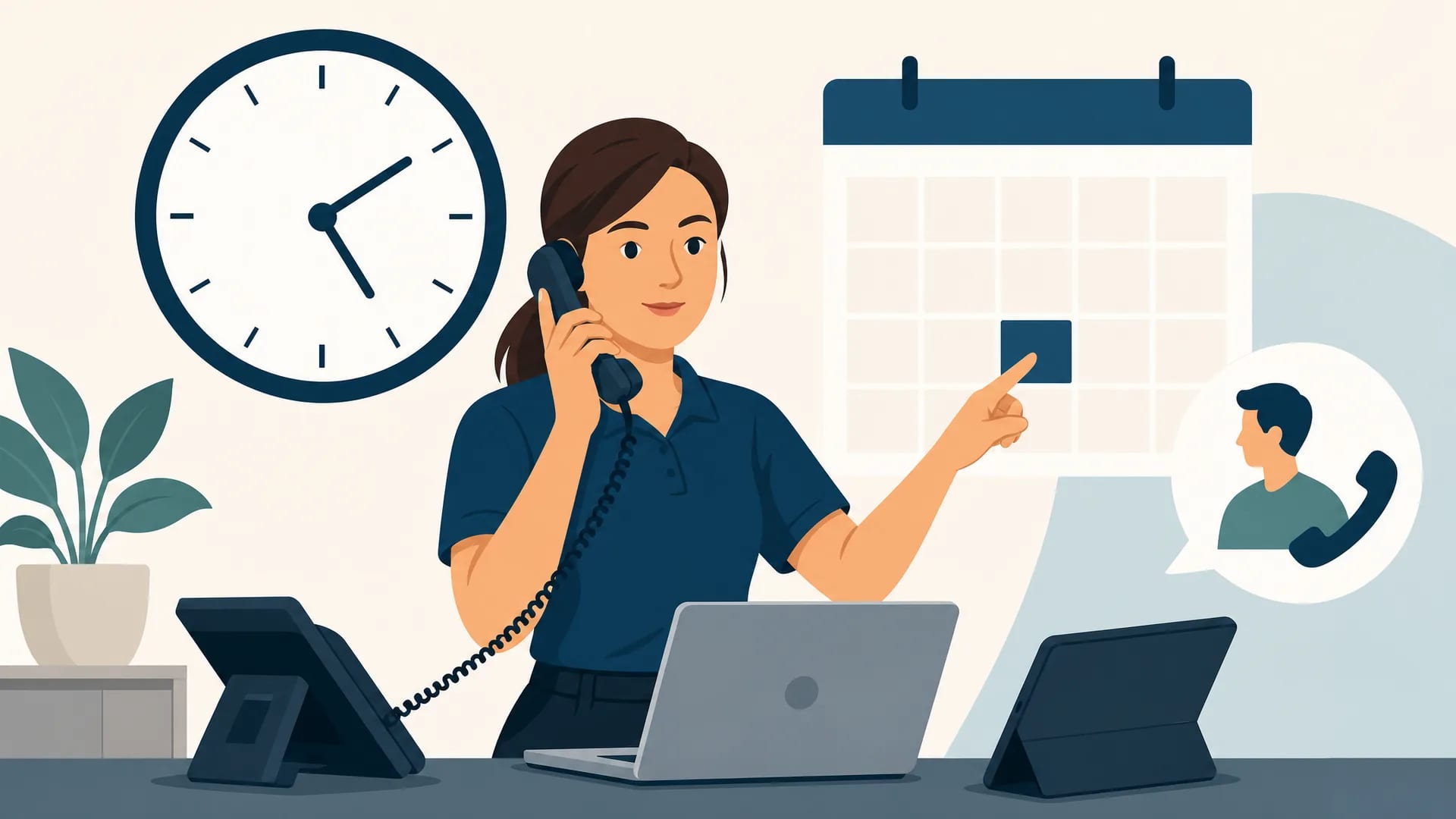
Most content marketing advice comes from the SaaS and eCommerce world. Free trials, add-to-cart funnels, drip email sequences. None of it maps cleanly onto a plumber, a physio, or a bookkeeper trying to fill next week's calendar.
Content marketing for service businesses works differently because the buying window is shorter and more urgent. Someone doesn't browse a burst pipe the way they browse a t-shirt. They search, compare two or three providers, and call. Your content's job is to be there, answering the exact question, at that exact moment.
Why Content Marketing for Service Businesses Is Different (and Often Ignored)
Product-based content marketing is built around discovery and comparison. Blog posts nudge someone toward a cart. Case studies reassure a buyer who's already added items and is hesitating at checkout.
Service businesses don't get that luxury. There's no cart. There's a phone call, a quote request, or a booking form. The prospect is often deciding in real time whether to trust you enough to let you into their home, their business, or their finances.
The SaaS/eCommerce content playbook doesn't fit service businesses
SaaS content chases top-of-funnel traffic and nurtures leads over months with automated email sequences. eCommerce content leans on product pages, reviews, and retargeting ads.
Service businesses need content that answers a narrower, more urgent set of questions: what does this cost, how long will it take, and what happens if I don't deal with it now. That's a different content strategy for small business owners than the one taught in most marketing courses.
This gap is exactly why content marketing for service businesses deserves its own playbook, not a repurposed SaaS template.
Building a Content Strategy for Small Business Service Providers
A content strategy doesn't need to be complicated. It needs to be built around your actual buyers and the handful of questions they ask before they book.
Start with a goal: more enquiries, better-qualified leads, or higher average job value. Then work backwards into the content that supports it.
Mapping content to the service business buyer journey
The service business buyer journey usually looks like this: a trigger event happens (a leak, a tax deadline, an injury), the person searches for a solution, they compare a few providers, then they contact one.
Your content should show up at each stage. Educational blog posts catch the search. Case studies build confidence during comparison. A clear, simple contact page closes the decision.
Choosing topics that match real search intent
Search behaviour for local services skews heavily toward high-intent, near-me and cost-based queries. That's why blog content built around those specific questions tends to outperform generic awareness content for service businesses.
Instead of guessing, look at what people actually type: "how much does X cost in [your city]," "how long does X take," "do I need a licence for X." These are buying-window searches, not idle curiosity. A simple content calendar mapped to a handful of these questions each month beats a scattershot approach every time.
If you want a deeper framework for this, SEO content strategy for service businesses covers how to prioritise topics by search volume and competition.
Blogging for Service Businesses: Turning Expertise Into Enquiries
A common objection: "We get most of our leads from referrals or local search anyway, so why blog?" Fair question. But blogging isn't competing with referrals. It's compounding alongside them.
Every referral still googles you before they call. A blog full of clear, useful answers reassures that person you're the real deal. It also gives Google more reasons to rank your site for the searches your next referral hasn't made yet.
What to blog about when you're not an ecommerce brand
You don't need product launches or seasonal sales content. You need answers.
- FAQ-style posts pulled straight from calls your team already fields
- Local guides ("what to know before hiring a [service] in [suburb/city]")
- Problem/solution posts that walk through a common issue and how it gets fixed
- Pricing and process explainers that set expectations before the first call
A local plumbing or electrical business that publishes straightforward "how much does X cost" and "what to do when Y happens" blog posts tends to capture the exact searches homeowners make when they're already in the buying window, not just browsing.
At Jumpgro Marketing, we see service business clients get the strongest response from content that mirrors the questions prospects ask on the phone before they book. Pricing, timeframes, and "what's included" explainers do most of the heavy lifting.
This is the essence of good SEO content for service businesses: not chasing volume, but matching intent. A handful of well-targeted posts, published consistently, will outperform a large volume of generic content every time.
Case Studies for Service Businesses: Proof That Converts
Testimonials are nice. Case studies close deals. A one-line quote saying "great service, highly recommend" doesn't tell a prospect anything about how their specific problem gets solved.
Case studies for service businesses work because they show, in detail, what happens when someone like the prospect hires you. That specificity is what moves someone from "maybe" to "book me in."
Structuring a case study that reads like a sales pitch
Keep it simple: before, after, result.
- Before, what was the client's problem, and why hadn't it been solved yet?
- After, what did you actually do, step by step?
- Result, what changed? Fewer callbacks, faster turnaround, money saved, problem gone.
A well-structured case study walks through a specific client's problem, the approach you took, and the measurable result. That reads far more persuasively to a prospect than a one-line testimonial. It answers the unspoken question every prospect has: "will this actually work for someone in my situation?"
Publish two or three of these on your site and link to them directly from your quote request page. They do more selling than any amount of generic "why choose us" copy. For a broader look at how proof and consistency build client confidence over time, building trust infrastructure with your brand is worth a read.
Using Video Content to Build Trust Before the First Enquiry
Video does something blog posts and case studies can't: it lets a prospect see and hear you before they ever pick up the phone. For service businesses, where trust is the whole sale, that head start matters.
You don't need a production crew. A phone, decent lighting, and a genuine answer to a common question will outperform a polished ad every time.
Low-cost video formats service businesses can start this week
- Behind-the-scenes clips, show your team on a job, your workshop, or your process
- FAQ videos, film yourself answering the five questions you get asked most
- Job walkthroughs, a quick before/during/after of a real job (with client permission)
These formats work because they're honest, not polished. A prospect watching a two-minute walkthrough of a bathroom reno or a tax review gets a clearer sense of what working with you looks like than any brochure could give them.
Video's real job here is trust-building ahead of the enquiry. By the time someone fills out your contact form, they've already half-decided you're competent and easy to deal with.
Turning Content Into Leads While You Sleep
Content only works as a growth lever if it's connected to a system that captures the enquiry. A brilliant blog post that ends with no clear next step is a missed booking.
Every piece of content, whether it's a blog post, case study, or video, should end with an obvious action: request a quote, book a call, or download a simple guide in exchange for an email address.
Setting up the systems that capture and nurture enquiries
Add clear calls to action on every page. Use a simple contact form that doesn't ask for more than you need. Follow up fast, because service business enquiries cool off quickly if left overnight.
From there, track what's actually working. Which blog posts bring in form submissions? Which case study gets referenced most in sales calls? This is where measuring the ROI of your content marketing turns guesswork into a repeatable system, and it's a step most small service businesses skip.
So, how long does content marketing take to generate leads for a service business? Most owners see early enquiries from targeted, high-intent blog posts within a few months. Momentum builds steadily from there as more pages rank and more case studies pile up. It's not instant, but it compounds, unlike a paid ad that stops the moment you stop paying for it.
Content marketing for service businesses isn't a side project. Done well, it's a lead-generation engine that works while you're on a job, asleep, or on holiday. If you want a system built around your specific niche, blog, case studies, video and all, book a free content strategy consult with Jumpgro Marketing and we'll map it out with you.
For a wider view of where content fits alongside other channels, broader digital marketing strategy for small business and more ways to get clients for your service business are good next reads. If you'd rather have it built for you, working with a digital marketing agency on your content walks through what that partnership looks like, and lead generation strategies for service businesses rounds out the picture beyond content alone.